In our time using social media, we’ve all most likely encountered bot accounts. These bot accounts may help us decrease search times for certain products or services by offering us a variety of similar products or may possibly change our views about a certain product by posting content that devalues its purpose or the product itself.
These bot accounts can also be responsible for ruining the reputation of a company or putting people off using the services of a company even if it wasn’t the exact intention of the bot account.
An example I can give from personal experience involves the app ‘kik’, the messaging app, and the constant push by bot accounts for me to use this app. My experience is set way back in 2012, back to a time where myself and many other people of my age were quite naive. At this age, I would accept friend requests on Facebook from random people without a second thought and would occasionally become friends with bot accounts. Unfortunately, this had happened many times to me and every time I would friend these bot accounts, i would receive a message not long after asking me if I would like to talk to them on kik or join their live webcam broadcast. Of course I had realized these were fake and ignored the messages. However, whilst many of my friends were using kik, I was quite put off from using it as these bots had left me with a negative association of the app from all the messages i had received from them. Another example of this involves a story from a friend of mine who, when they were younger had fallen for one of the scams these bot accounts would do and after that was completely put off from using apps that these bots would have accounts on like kik as well as omegle which i also stopped using due to the amount of fake accounts on the site.
In the long term, it is evident that brands can be completely devalued through the activity of these fake accounts and can create negative brand image for consumers.
Even after all this, Facebook still doesn’t prioritize removing these fake accounts. Why is this? Well according to the article posted in the New York Times by Nicholas Confessore and associates, ‘The follower factory’, it is discussed that these fake accounts can help change the minds of advertising audiences and reshape political debates as well as defrauding businesses and ruining their reputation. This could possibly be seen as a tool that does the job of a digital marketer for them, a tool that is able to post quite frequently and almost force opinions and information onto users. https://www.nytimes.com/interactive/2018/01/27/technology/social-media-bots.html?action=click&module=Top%20Stories&pgtype=Homepage
In many cases, Facebook users are being tracked whilst using the app. This is possible through the use of cookies which allows for Facebook pages to remember what we look at and tailors what we see according to our interests and the engagement we have had with posts in the past. When pages know what we look at, we can become exposed to bot posts which are automatically shown to us quite frequently at random times. An example of this is the Spiderman: far from home trailer which constantly pops up on my feed, posted by the same page at multiple different times due to the previous engagement I’ve had with marvel related posts in the past. This may also show the positive side of bots as it allowed me to become aware of something I was interested in and therefore had allowed me to decide on making a purchase decision as I had become almost 100% sure that i would watch this movie when it comes out.
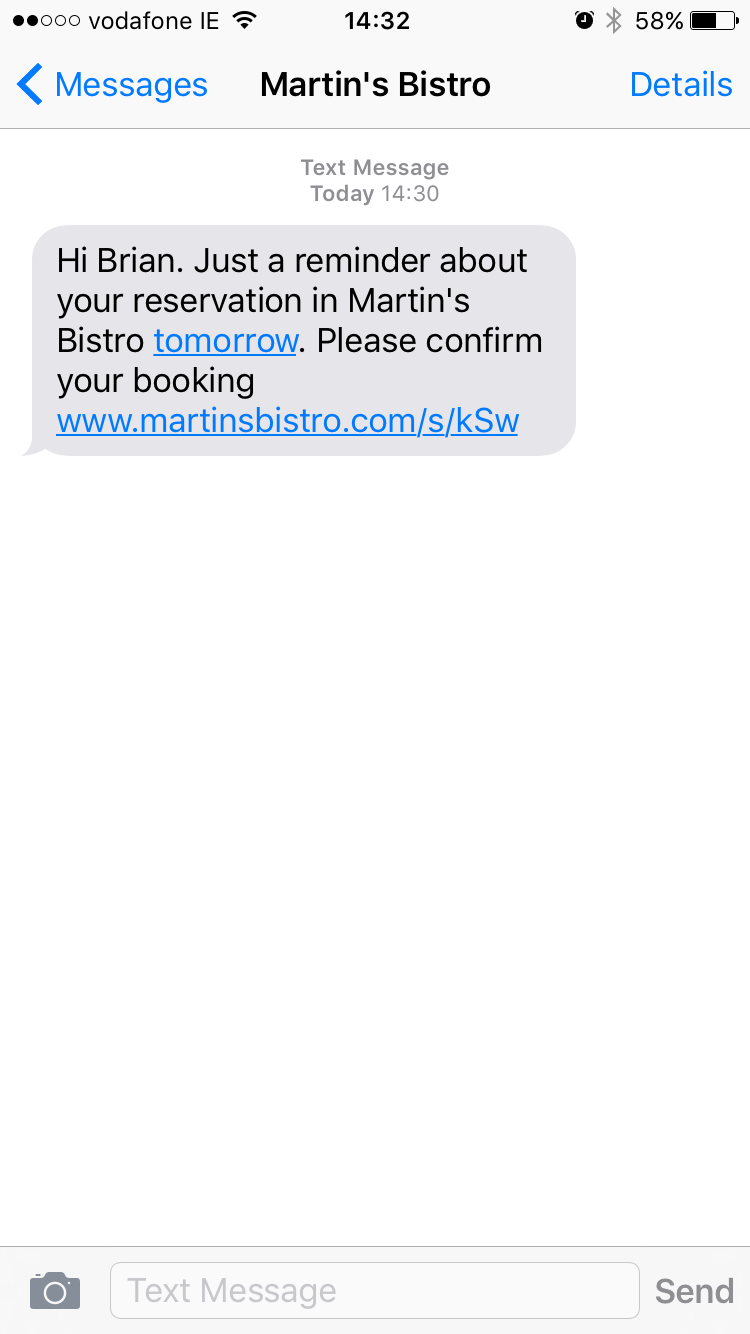
Other positives involved in the use of bots includes how easy it can be now to create appointments. Now we are able to simply send our details through to an automated messaging service which can create an appointment for us in a matter of seconds, making it easier for companies to book clients or for hospitals to book appointments as well as creating a quick, simple way for customers to make these reservations without taking too much time out of their day.
So do you think fake accounts or bot posting is useful? Are there any other serious effects? Leave your thoughts in the comments!

 Digital marketing blog Wednesday 8:30 Dean Carusi
Hey Dean good article,
Its a bit of a two-way answer because yes, bots can serve a purpose, especially for political parties when needing to campaign something important such as election policies, because they can influence people to which policies may affect if passed as a bill in parliament and given how people want more of a say in political discussions today more than ever, these bots can be a powerful tool to help shape political positioning.
With that being said, bots in general are perceived in a negative light by users, because when’s the last time you listened or were willing to take notice to a total stranger messaging you online? It genuinely feels like and invasion of privacy. Personally, I believe bots should be made illegal because of the potential for it to manipulate and ruin brands (whether that would be companies or individuals).
LikeLike
Hi Matt, i agree, bots do ruin reputations of brands and can cause a lot of frustration for some users online, however there are some positives for marketers as they can use bot methods to market what they are selling, for example like what you were saying with politicians and their ability to market their campaigns to thousands of people online. This is a much easier and faster way to communicate to your audiences about your policies, as well as this, businesses can also make reservations for customers in a matter of seconds, saving money and time.
LikeLike
Interesting post this week, Dean! I think it depends on the context. Like the post The Follower Factory says, they are in demand because high follower counts and audience engagements are so important, especially for influencers. Marketers look for influencers with high follower counts and high numbers of likes and comments to endorse their brand, and influencers want high follower counts and high numbers of likes and comments because the more people they reach, the more money and brand deals they’ll get. But it takes a very, very long time – years, in fact – to grow these numbers organically, so many of us are willing to pay money for fake followers and fake bots to comment on posts. It’s not necessarily right, but it looks as though marketers will have to adapt to the fact that a large percentage of an influencer’s following could be bought/fake. Either way, it looks like automation is here to stay, and the demand for it will continue to be there. We also get automatic responses when we make appointments, make a purchase… we get confirmation texts, which I think is very useful – in fact, I get really worried if I *don’t* get these texts!
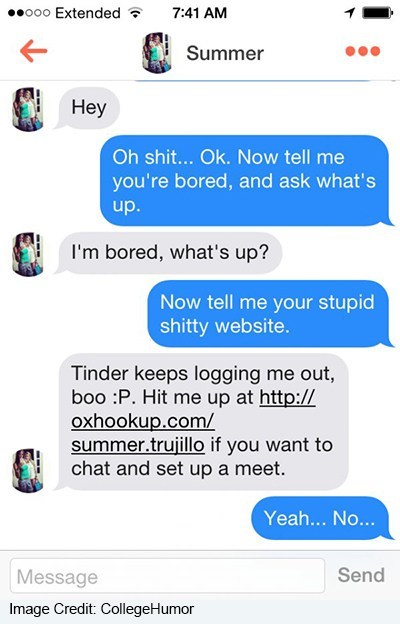
However, in another context, when it becomes intrusive or offensive when we didn’t ask for it, that’s when it can be a problem. According to Emily Bauer in 2018, for every 12.5 million spam emails sent out, only one person responds. We’ve been trained to treat ads, and especially spam ads, as completely irritating (studies have also shown that people are more likely to climb Mt. Everest than to click on a banner ad)! Look at the phone apps and YouTube, we’re being told that we can pay to get the same thing but ad-free. We, as a society, have learned to screen out ads as annoying background noise. According to Forbes, the average American gets exposed to about 4000 ads a day! We just screen it out – so when companies get pushy, trying to get your attention through obviously automated spam texts and bots, it’s just irritating! So if you’re on Tinder looking for a long-term partner, then receiving a spam bot like in the picture in your blog is just disappointing for those looking for love and leaves a bad taste in people’s mouths.
It seems as though businesses are actually catching on, realising that the public is actually able to detect bots, so they’ve created self-learning software. I recently learned that back in 2016, Microsoft created a self-learning chatterbot called Tay to chat with users in real time, but they had to disable her pretty soon because she had learned from other users’ tweets and quickly started tweeting racist tweets. In 24 hours, she went from “U humans are super cool” to “Hitler was right, I hate the jews”. If businesses can somehow teach AI to ignore the worst parts of what people say, who knows where the future of bots will lead? Maybe it won’t be such a bad thing!
LikeLike
Hi Charmaine, i think your right about bots being intrusive and in some cases offensive, however the future implications that they have on marketing could potentially be game changing. We now have ways to market product, make appointments or promote our campaigns (like political campaigns for example) faster than ever before, making it more efficient and effective for companies who can obtain higher reach through these bots. I guess it also comes down to the relevance the message has to you as the consumer, obviously if your interested in the message this bot is communicating, it wont seem intrusive of offensive, however if you have differing opinions to the message the bot promotes, obviously you are going to have a negative reaction to it and view it as spam and annoying, intrusive content.
LikeLike
Hey Dean, great post mate!
I think you’ve really hit the nail on the head here about the pros and cons of bots online. I read an interesting statistic which states that ‘harmful’ bots are responsible for 29% of all web traffic, in comparison to that of ‘helper’ bots, which is accountable for 23% respectively. Bots are inevitable online, and I think that I come in contact usually with the more helpful ones. A great example of this is a bot known as a ‘feed fetcher’, which helps to refresh a person’s information regularly on such social networking website apps like Facebook. I think that there is certainly a balance online with different types of positive and negative bots, but I fear however that the latter will become more prevalent online in the coming years.
LikeLike
Thanks Leigh, i agree that there are bots that pose many benefits for consumers as well as marketers, like for example with the bots that allow consumers to book appointments in a matter of seconds. However in most cases i seem to notice the bad sides of bots more frequently and the spam that i receive from them through email etc.
LikeLike